We arrived at the Chincoteague Field Station; this was the headquarters of the Road Scholar trip that we signed up for. The trip was timed for the end of the usual northern spring migration on the east coast. The Field Station is located close to Wallops Island on the Virginia Eastern Shore.
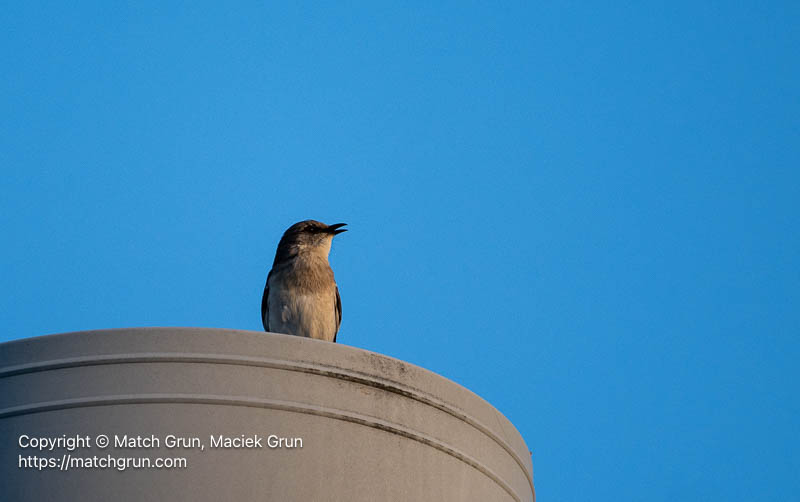
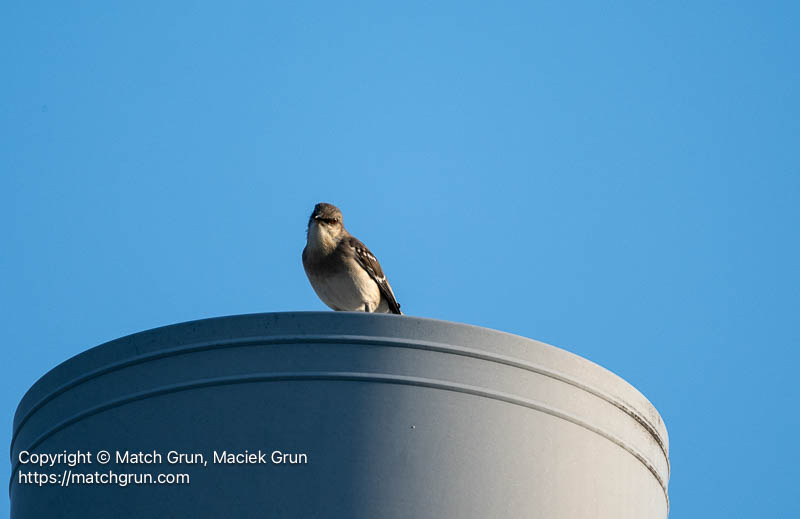
Every morning, before breakfast, our group took a walk through the grounds of the Field Station to see what birds we could find. One of the Mockingbirds was perched on the top of the streetlight near the dining hall. Several Northern Mockingbirds are residents at the Field Station. Mockingbirds are renown for their ability to imitate the calls of several other bird; this bird had been busy calling since sunrise.
Northern Mockingbird, Chincoteague Field Station.
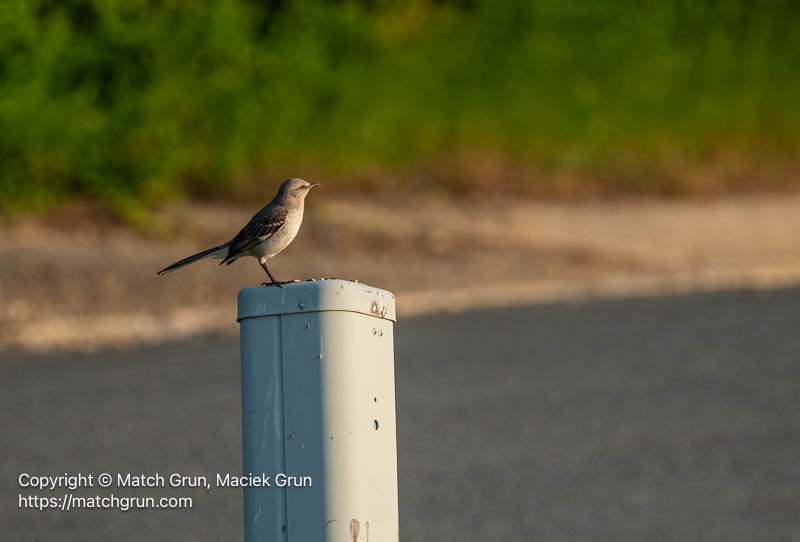
During our early morning walk, I encountered this Mockingbird perched on a post.
Mockingbird Perched On Post.
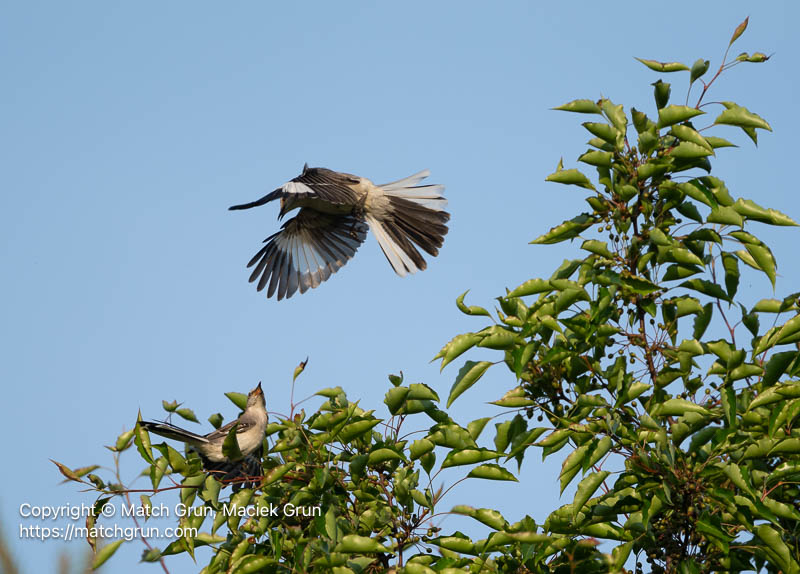
After a short while, this bird took flight to the top of a nearby tree. Here there was another Mockingbird perched close to the tree top. I am not sure whether this was a breeding pair that had mated or whether this was an offspring.
Mockingbird Pair, Chincoteague.
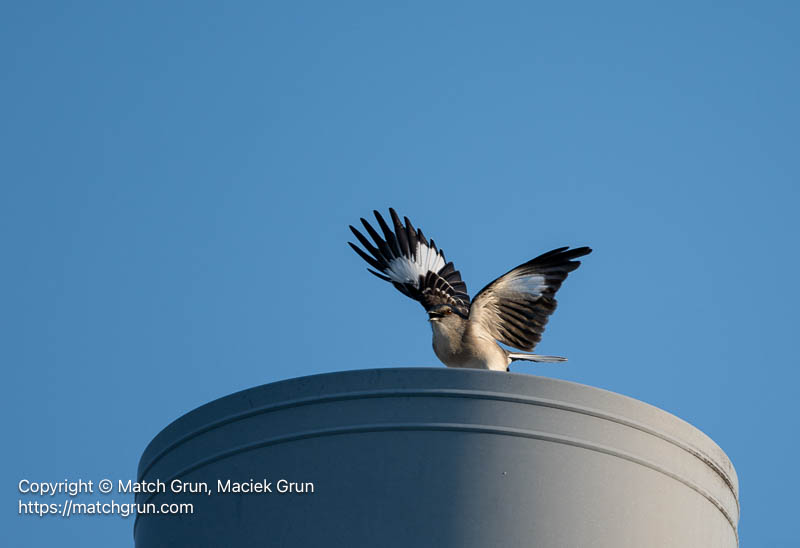
Later, as I returned to the dining room area, the Mockingbird atop the streetlight was busy calling. Periodically, it would take flight and land back on the streetlight a few seconds later. I could not tell whether it was hunting for bugs or whether performing to attract a mate.
Mockingbird Taking Flight, Chincoteague.
I made this image of the Mockingbird perched on the streetlight, looking down at me.
Northern Mockingbird.
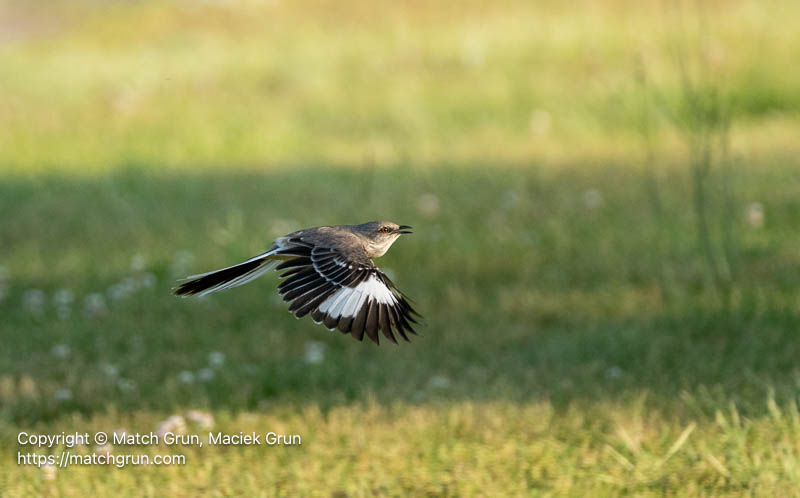
There were other Mockingbirds in the grounds. I made several images of one of the birds in flight. Here is one of the images captured as the the bird flew up from the grassed area to a nearby tree limb.
Mockingbird In Flight.
After breakfast we had a full day of birding planned.
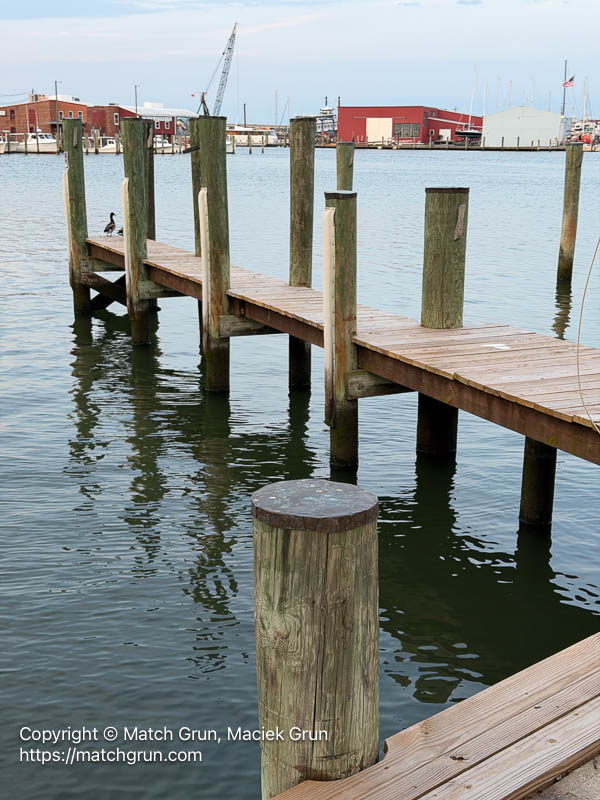
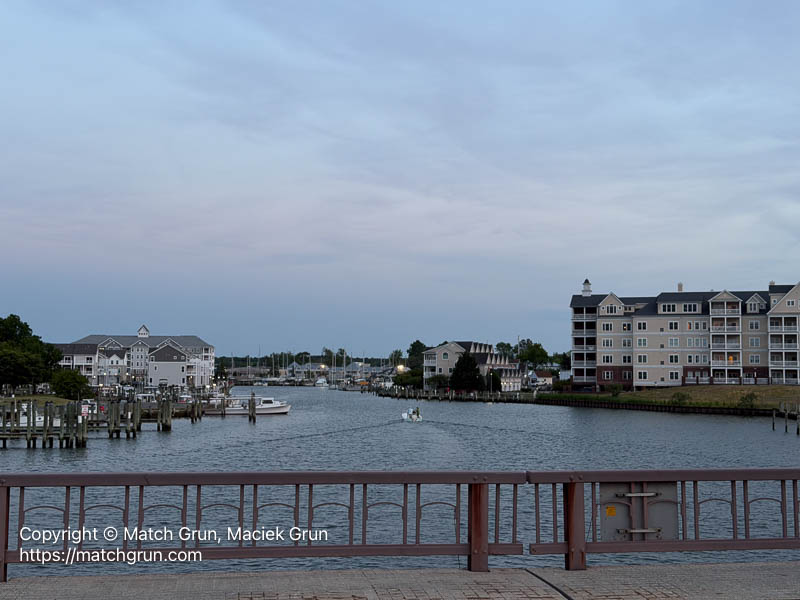
Last month we made a one week birding trip to the Eastern Shore of Virginia. Arriving in Baltimore, we found our rental car and drove for an overnight stay at Cambridge, Maryland. After a seafood dinner, we headed down to the harbor. On reaching the harbor, the drawbridge was raised, so we then had to wait until water traffic had passed and parked the car. We took a stroll through harbor neighborhood.
Cambridge Harbor Moorings.
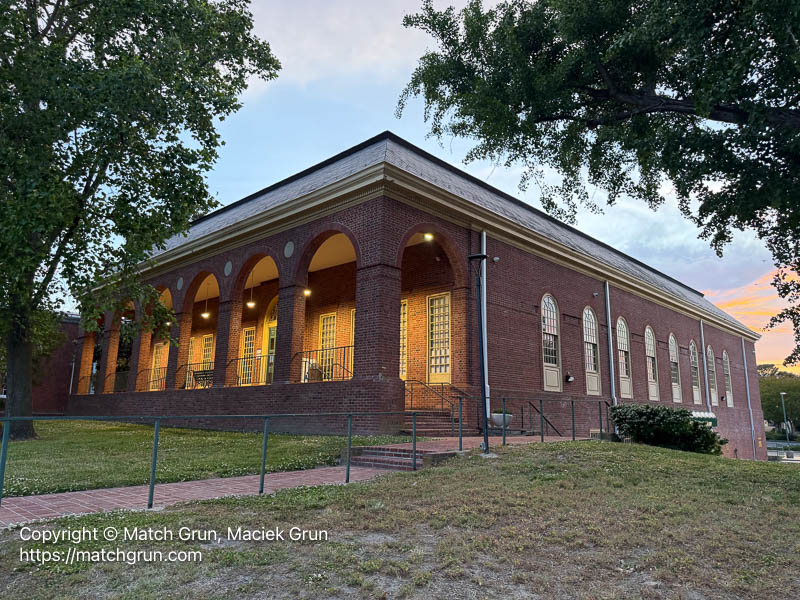
It was late in the day, close to sunset, when we found this classic brick building. It turned out to be the Dorchester Public Library. The lighting had been switched on, so it provided a pleasing warm lighting to the the building’s portico. Cambridge is one of the oldest settlements during US colonial times. Several buildings in the city center have extensive brick and stone facades from the 18th and 19th centuries.
Dorchester County Public Library, Cambridge.
Soon it was time to return over the drawbridge to the parked car. This is an image after sunset from the drawbridge. That gap in the fence (below) is the gap between the two bridge segments of the drawbridge.
Cambridge Harbor, From Drawbridge.
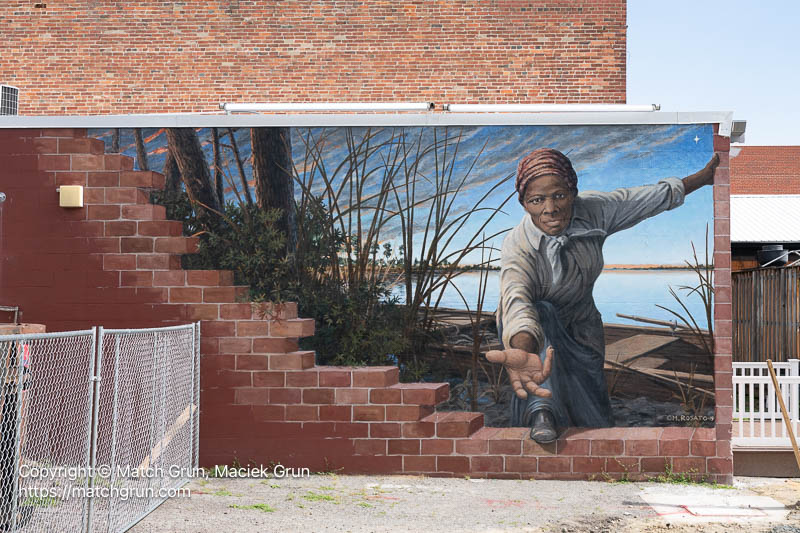
The following morning, we head back to the town center before continuing our trip to Virginia. Here we stopped at the Harriet Tubman Museum. It was closed at the time, but we did go the the alley at the side of the building to see the Harriet Tubman mural that is located at the rear of the museum.
Harriet Tubman Mural, Cambridge, MD.
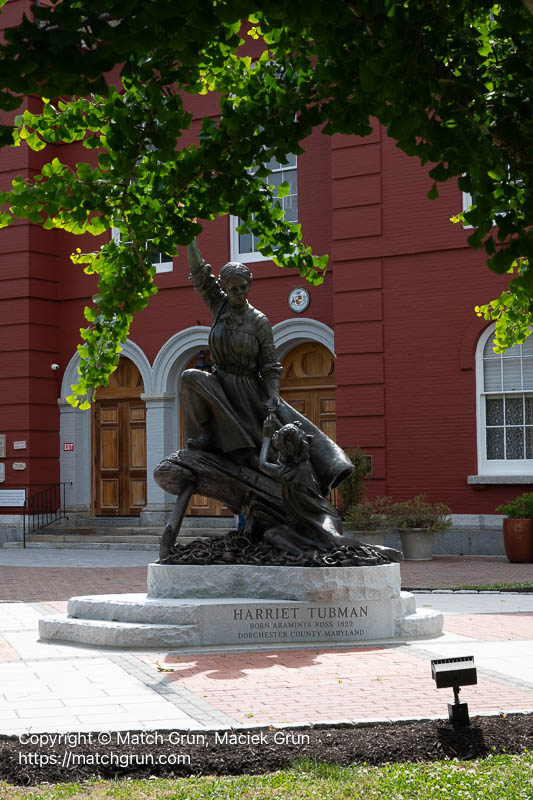
Harriet Tubman was a conductor of the Underground Railroad that was created to guide enslaved people to freedom. A statue was erected to commemorate Harriet Tubman outside the Dorchester County courthouse — see below. More information on Harriet can be found on the internet.
Harriet Tubman Statue, Cambridge.
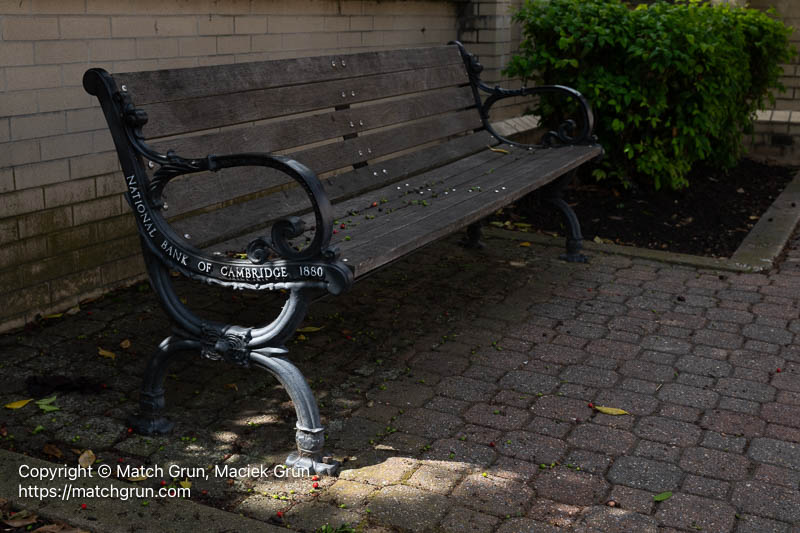
Close to the County Courthouse is a building that used to be the National Bank of Cambridge. This building has a fabulous bench located outside the main entrance. It still has the original cast iron frame from 1880.
National Bank Cambridge Bench.
We made our way back to the parked car and continued our trip to Virginia.
At this time of the year, birds are in the middle of their spring migration. Once again, we can see the bird species that we missed since last year! Last week, we visited Chatfield State Park, where we had heard that the warbler’s were back in the park. I have wanted to capture an image of a Yellow Warbler since I first encountered the species last year. So last Sunday, I paid a visit to Chatfield hoping to find one.
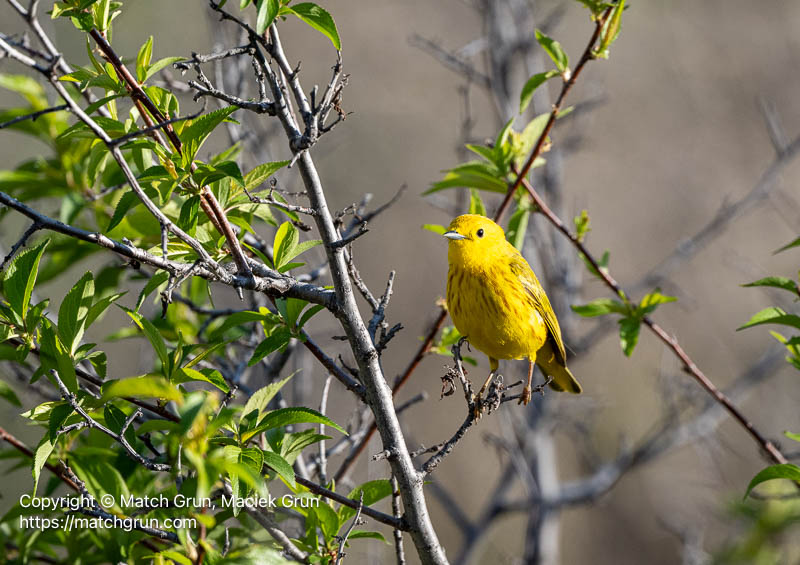
I found several Yellow Warblers working through the Willow bushes along the path. Little birds are always difficult to capture; they are always moving and their size limits how close one can approach before they take flight. I managed to capture this male warbler; the males have very distinct red stripes on their breasts.
Yellow Warbler, Chatfield State Park.
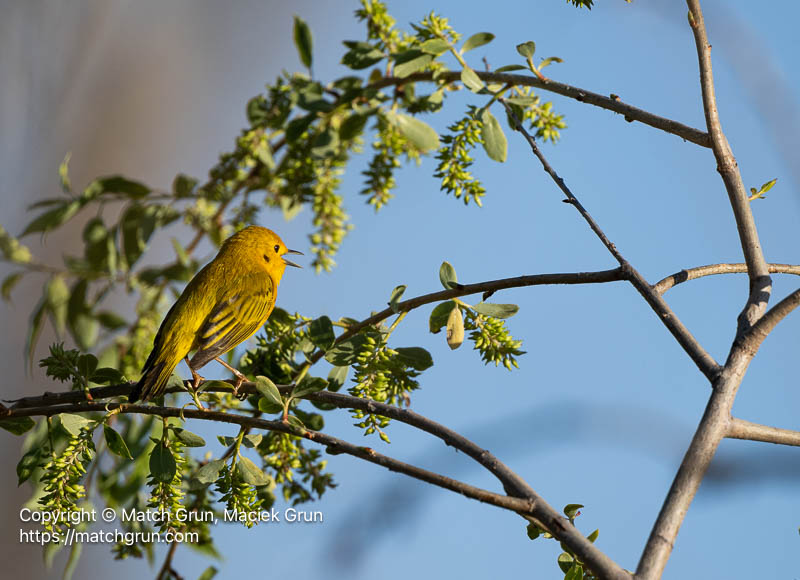
The male warblers spent much of the time calling out to find mates. Once one becomes use to hearing their call, it soon became easier to find other warblers.
Yellow Warbler Calling, Chatfield.
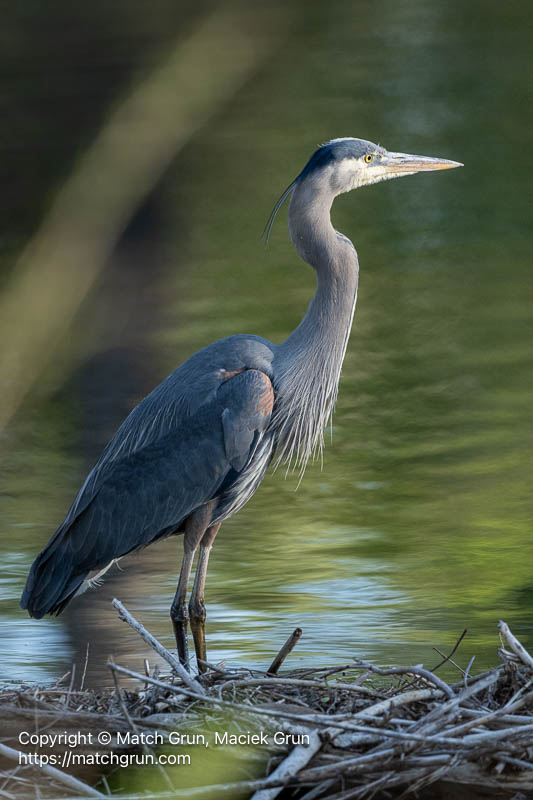
I was standing a few feet away from the bank of the South Platte River when photographing the yellow warbler above. After a few minutes, a Great Blue Heron flew in and landed at the river bank. How could I miss this opportunity!
Great Blue Heron Just Landed.
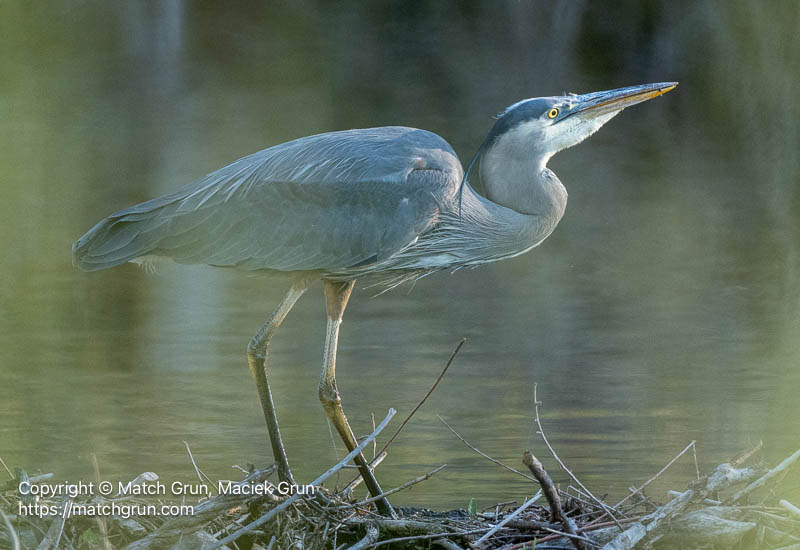
The heron started walking through the river, along a small dammed collection of branches. Maybe a beaver was busy damming the river at this point? Anyway, the heron paused periodically to feed on bugs and small critters in the water.
Great Blue Heron Feeding On Bugs.
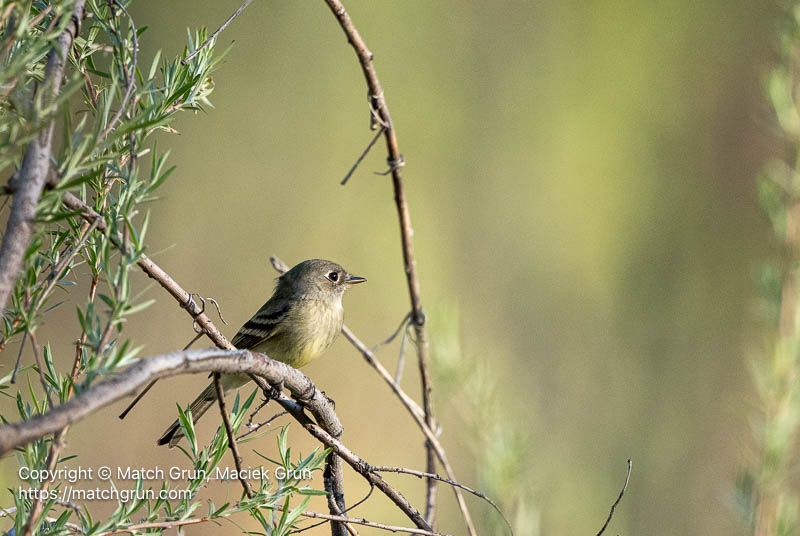
While the heron was working through the river, the yellow warbler continued calling out. Also, a Cordilleran Flycatcher was also working this location. Periodically, they suddenly take flight to capture a bug, and returning to their perch.
Cordilleran Flycatcher, Chatfield.
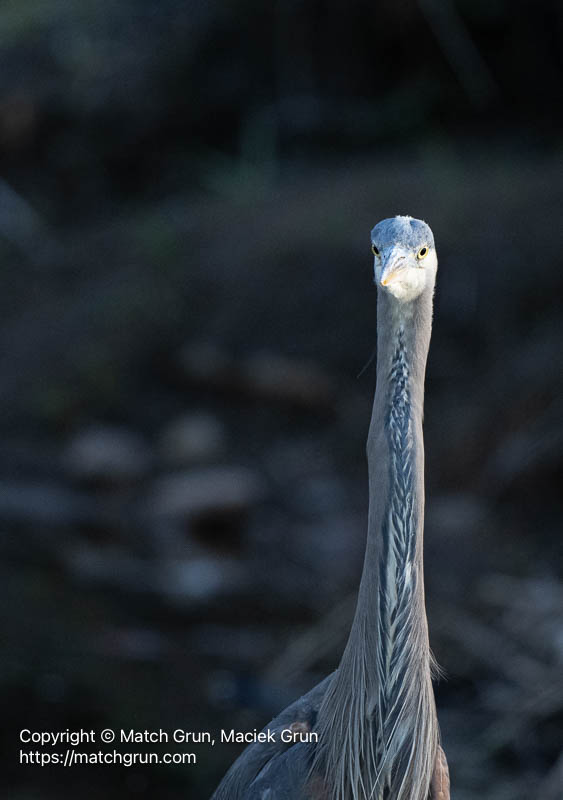
While the warbler and flycatcher were busy, the Great Blue Heron continued working through the river. More opportunities to see what would happen. And a choice of three birds to investigate. The Heron looked across towards me, so I managed to capture a full-face portrait. It is amazing to see that herons’ eyes are angled down so they can get a good view of their prey in the water.
Great Blue Heron Portrait, Chatfield.
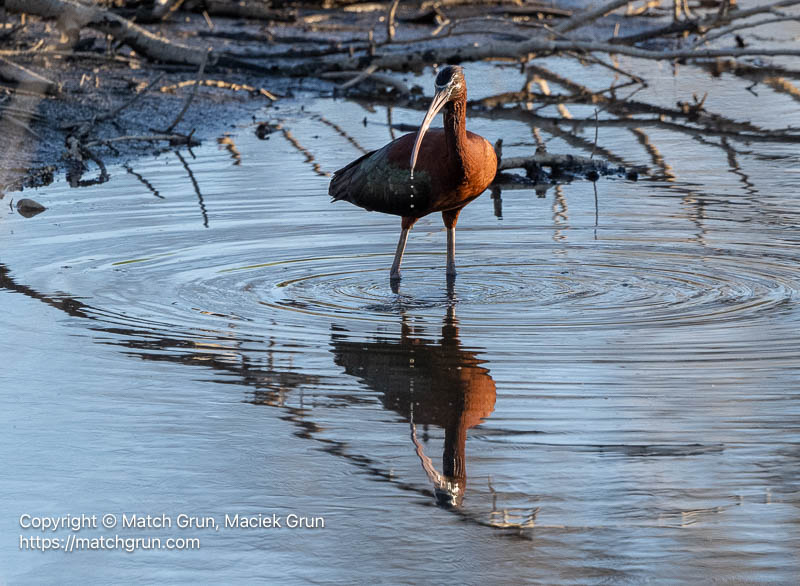
It was soon time to return home. On the way to the parking lot, I noticed an Ibis had landed in the river.
White-Faced Ibis, Chatfield State Park.
The ibis was working through the low water feeding on bugs and critters in the mud along the river banks.
I heard that several White-Faced Ibises had been sighted at Chatfield last week. So I was lucky to see one and capture an image of one.
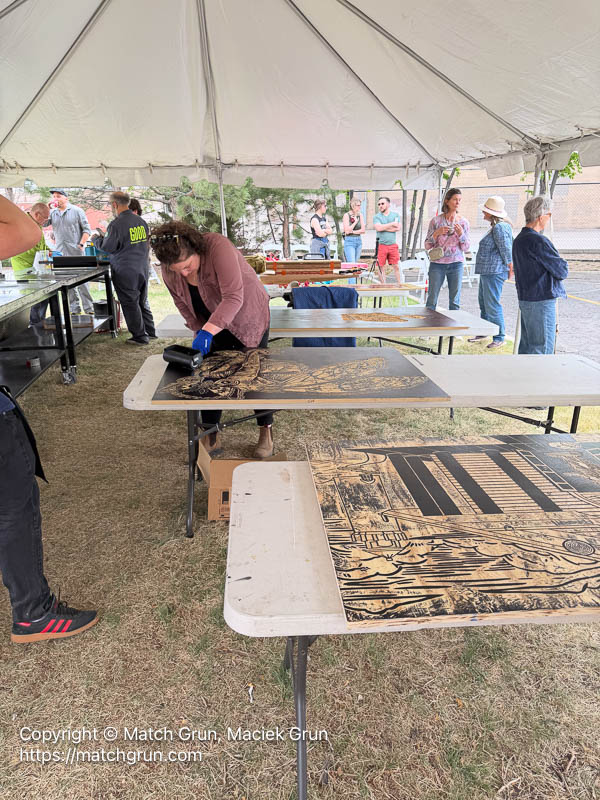
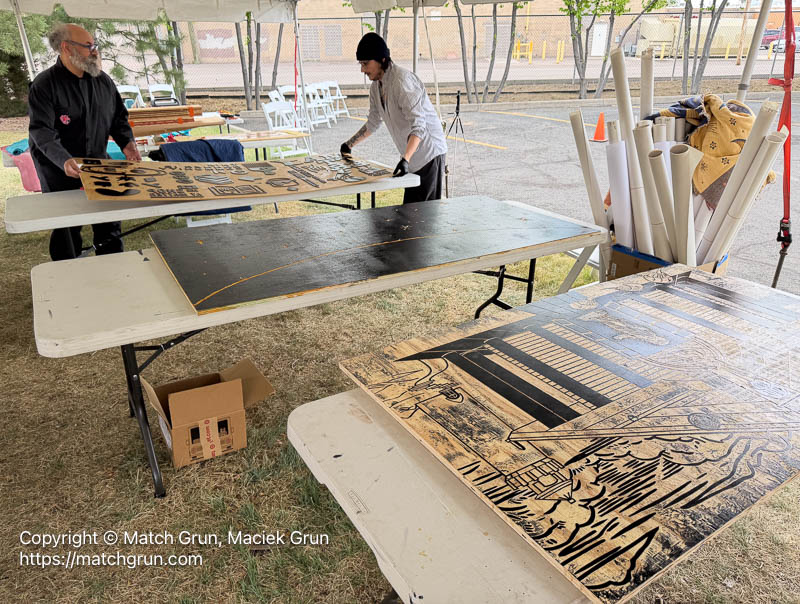
A woodblock printing process is used for printing images. For steamroller printing, the block maybe 6ft by 3ft in size. Plywood or MDF is used as the block. After the artist has carved the block, ink is applied to the block with a brayer or roller. For this event, a team of assistants performed the inking process.
Inking The Woodblock, No 1.
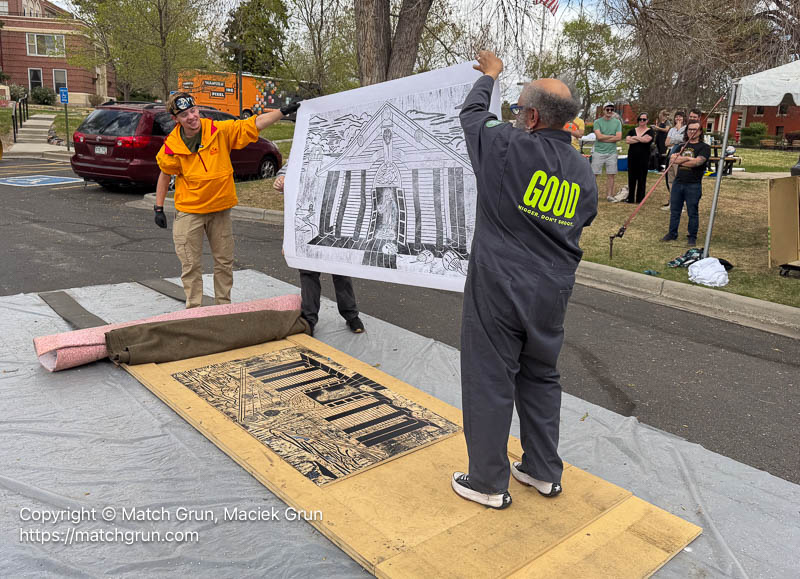
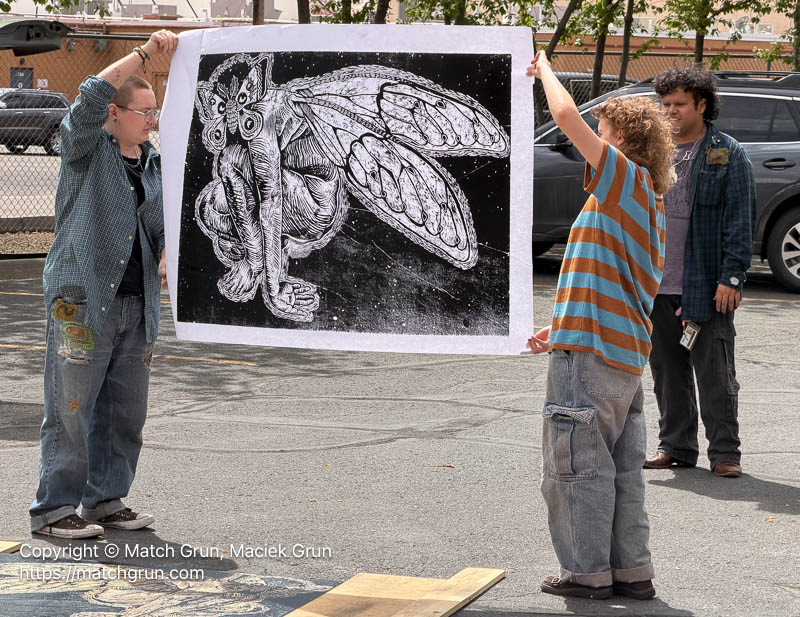
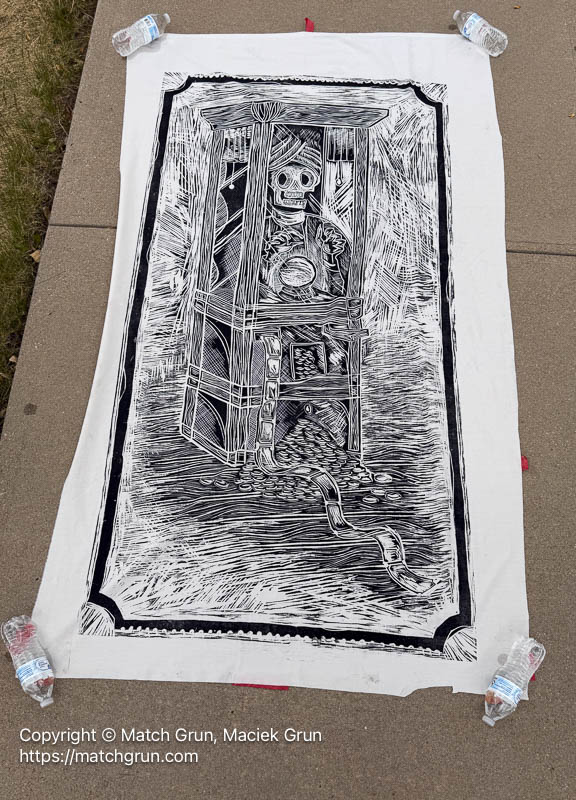
Here are images of some of the prints that were made at the event.
Steamroller Print, No 1.
Print number 2…
Steamroller Print, No 2.
Print number 3…
Steamroller Print, No 3.
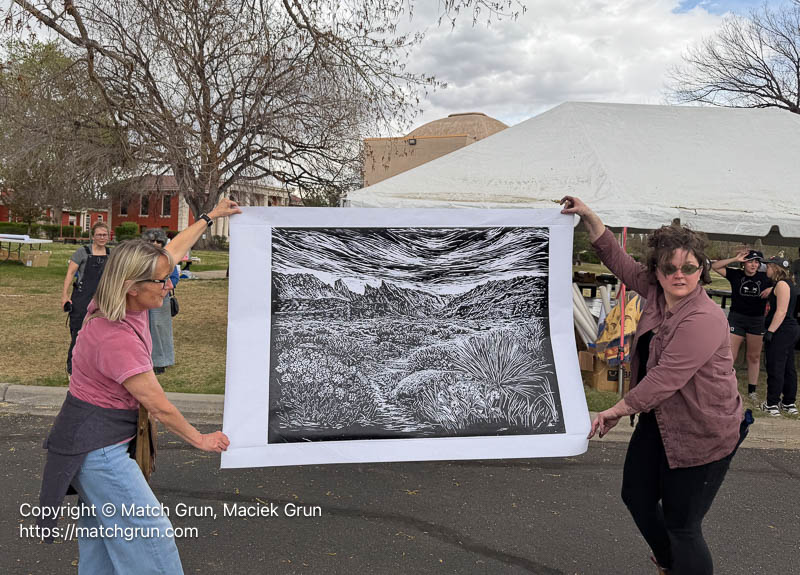
Finally, a print with a landscape.
Steamroller Print, No 4.
This was a fun event at MO’Print 2026. The next event is scheduled to take place in 2028.
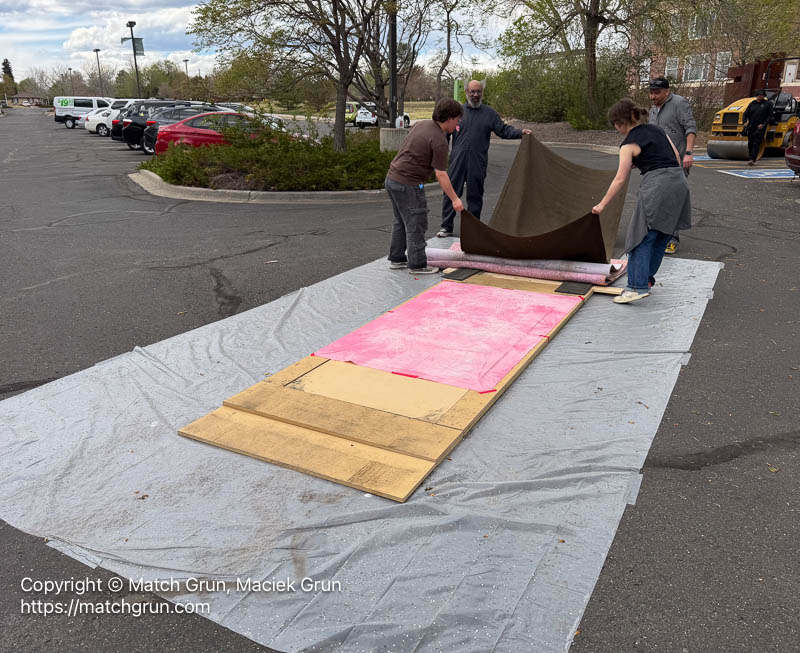
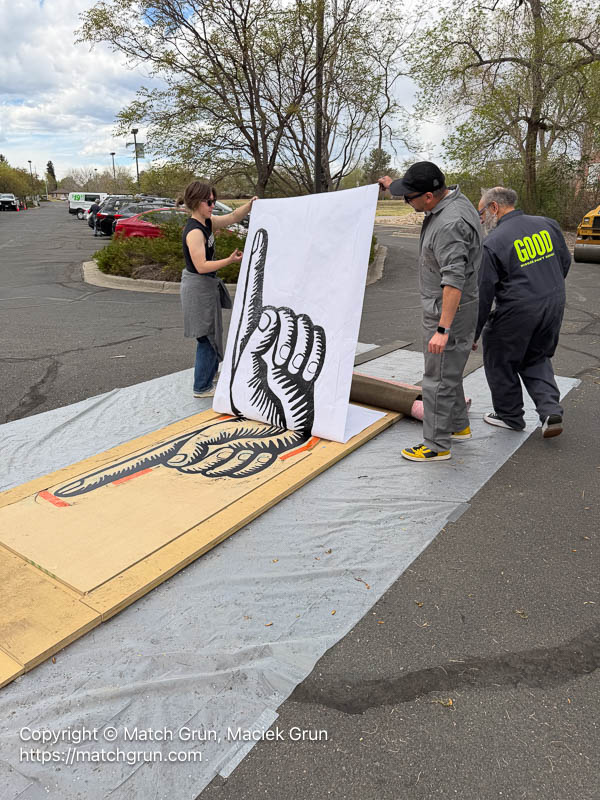
While at the Steamroller Printing event, I recorded the sequence of events to print an image. This is a woodblock process. Inking of the block was done under a tent canopy to keep falling leaves, twigs, blossoms, etc. away from the blocks. Here we see the artist (on the left) with an assistant lifting the inked block.
Picking Up Inked Woodblock.
This is block is laid into a jig (or template) that will keep the block from moving when under pressure.
Laying Block In Jig.
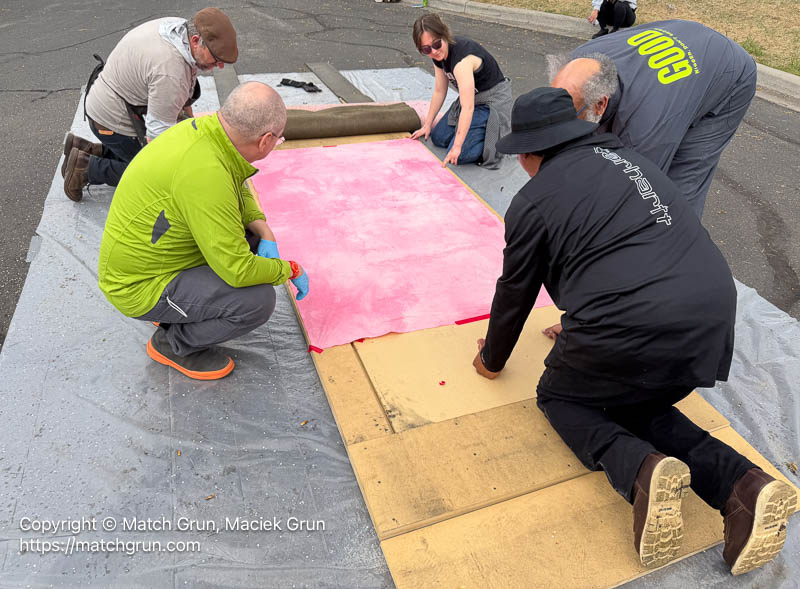
This particular block was printed onto pink fabric, instead of paper. Several assistants are stretching and taping the fabric to the jig.
Stretching Fabric On Block.
The next step is to lay two blankets over the jig. The blankets serve to provide even distribution of pressure to all parts of the block when printing.
Laying The Blanket.
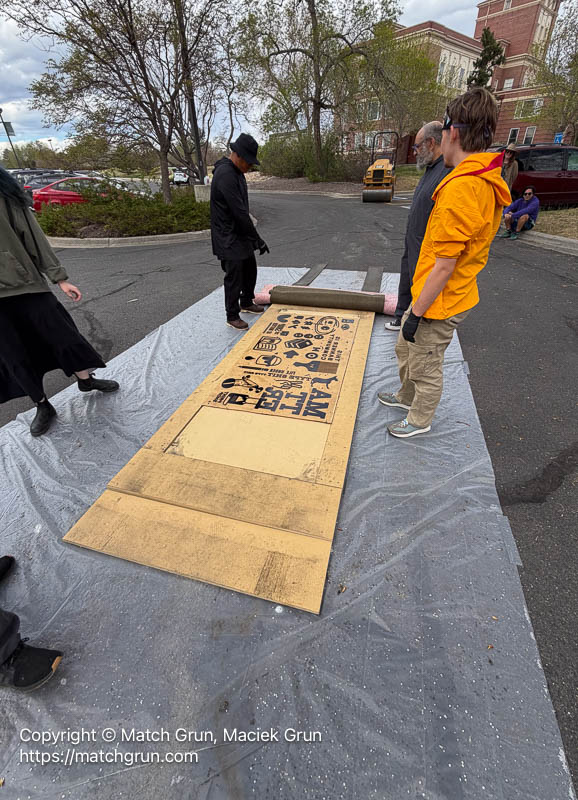
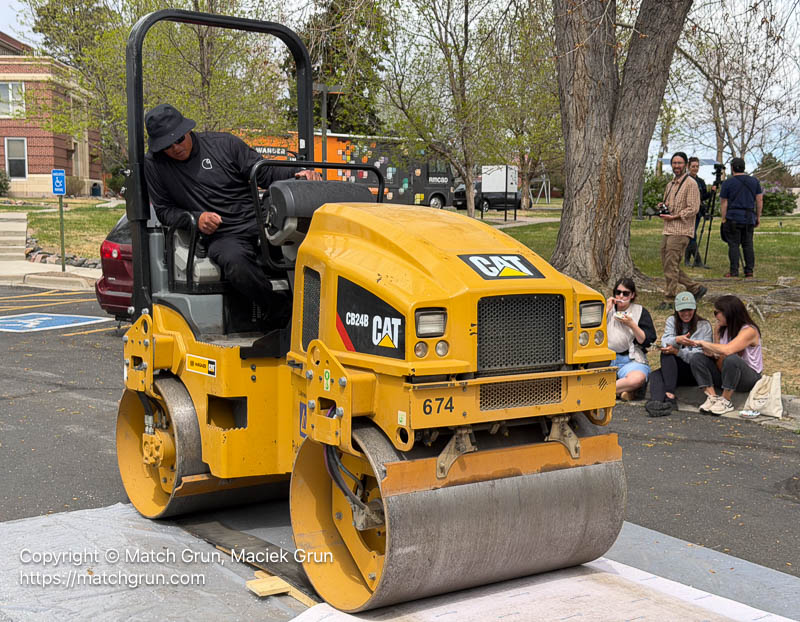
There is a shallow ramp that leads up to the jig. The ‘roller driver must approach and climb the ramp very slowly to make sure that the jig does not move as weight is applied to the entire assembly.
Rolling Onto The Press.
Here we see the ‘roller driver watching and aligning the steamroller to ensure that it mounts the assembly.
Rolling Onto The Blankets.
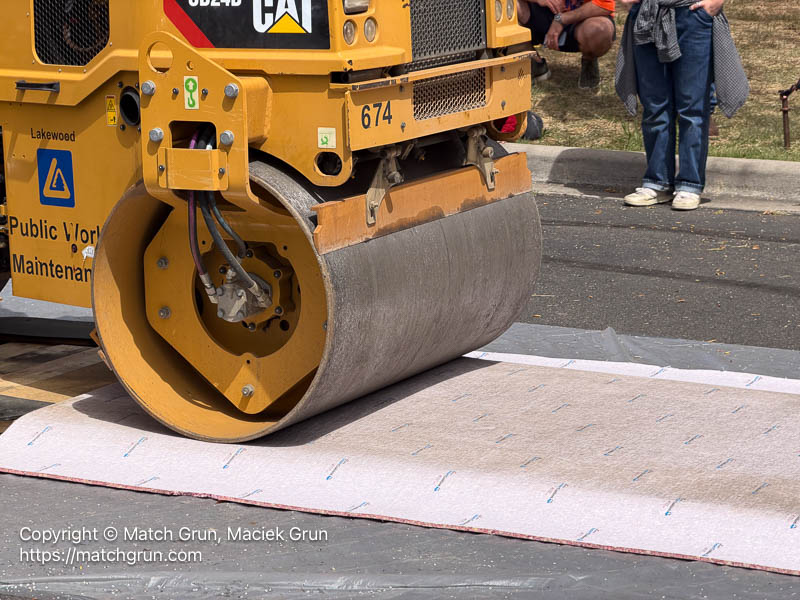
The ‘roller is kept aligned with the jig to ensure even pressure is applied to transfer the ink from the block to the fabric.
Rolling Over The Blankets.
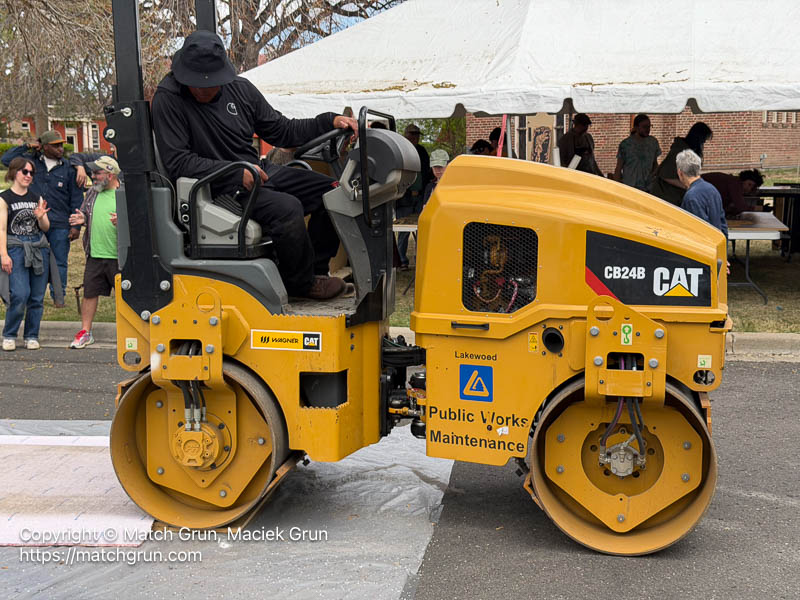
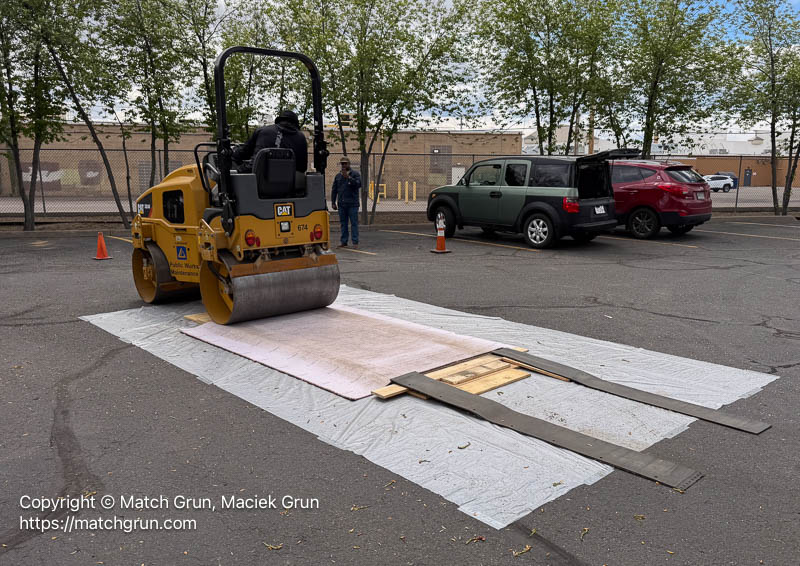
Finally the ‘roller reaches the end of the print path and rolls off the jig.
Rolling Off The Blankets.
The blankets are now removed from the fabric.
Removing The Blankets.
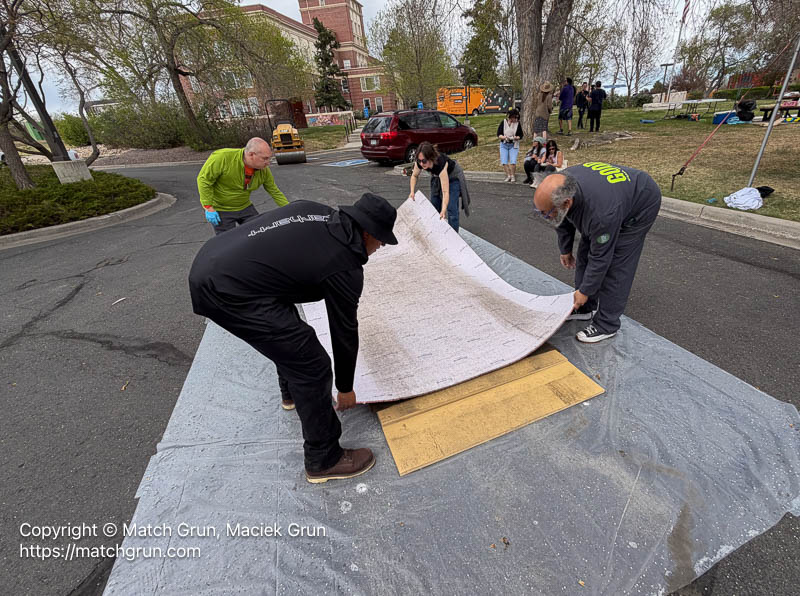
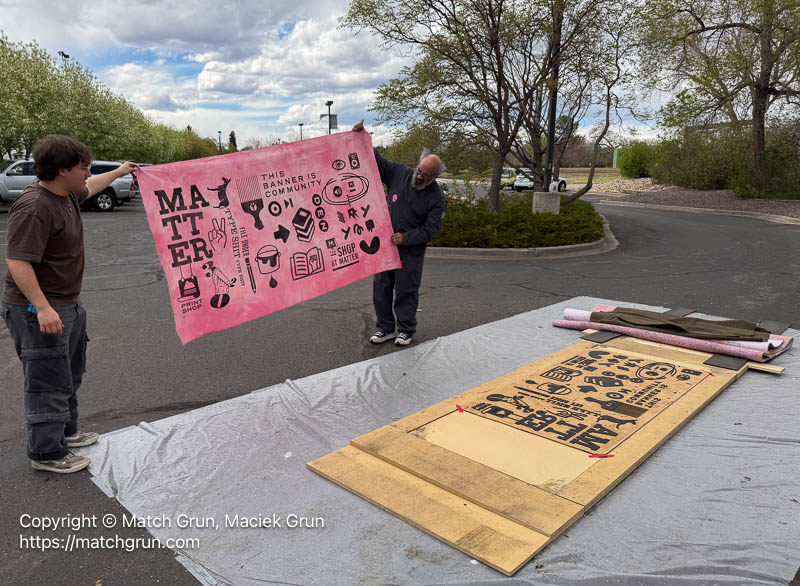
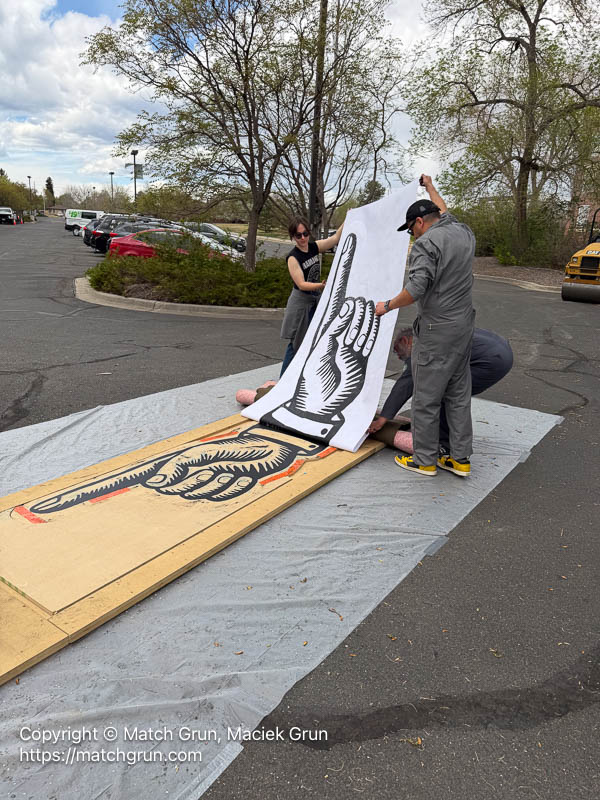
Finally the printed fabric is pulled carefully off the block. Here we see the artist and assistant holding up the finished print.
Print: This Banner Is Community.
A woodblock print, like the one illustrated here, uses a relief printing process.
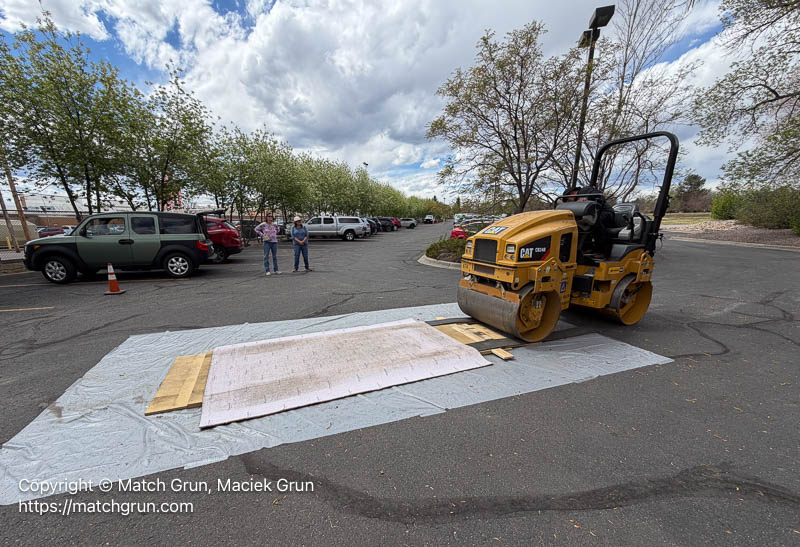
Yesterday, I attended the Steamroller Printing event that takes place on one of the final days of MO’Print 2026 (Month Of Print, 2026). This is the first time that I had seen “steamroller” printing. The Month Of Print is held every two years, between February and April. Printing took place on the parking lot of the Rocky Mountain College of Art And Design (RMCAD). I arrived at this event, just as the steamroller had completed pressing a print.
Steamroller At End Of Press, MO’Print 2026.
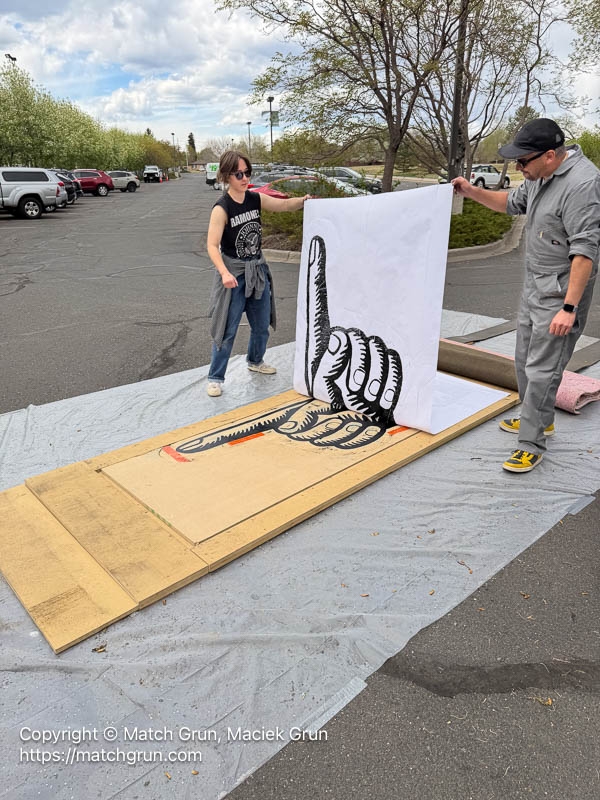
Here are some images as the print is being pulled from the block.
Pulling The Print, No 1.
Pulling…
Pulling The Print, No 2.
Pulling…
Pulling The Print, No 3.
Prints are made using the same method as for woodblock (or linocut) printing.
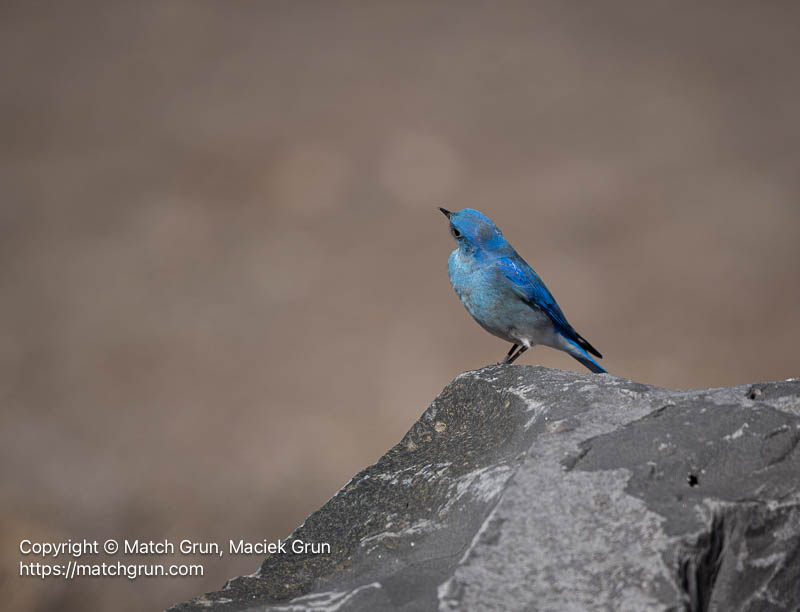
One of the first birds that we encountered in the Wildlife Refuge, was this Mountain Bluebird, at one of the parking lots. While watching this bird, it kept looking up into the sky. Perhaps there was a raptor in the vicinity. We did see a few Red-Tailed Hawks later on.
Mountain Bluebird Lookout, Monte Vista, No 1.
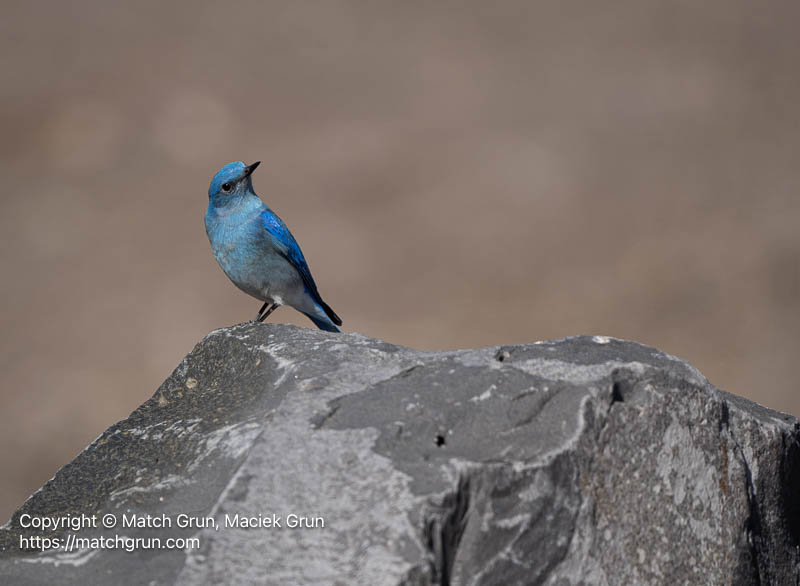
The Bluebird turned to face in my direction, also looking up in the sky.
Mountain Bluebird Lookout, Monte Vista, No 2.
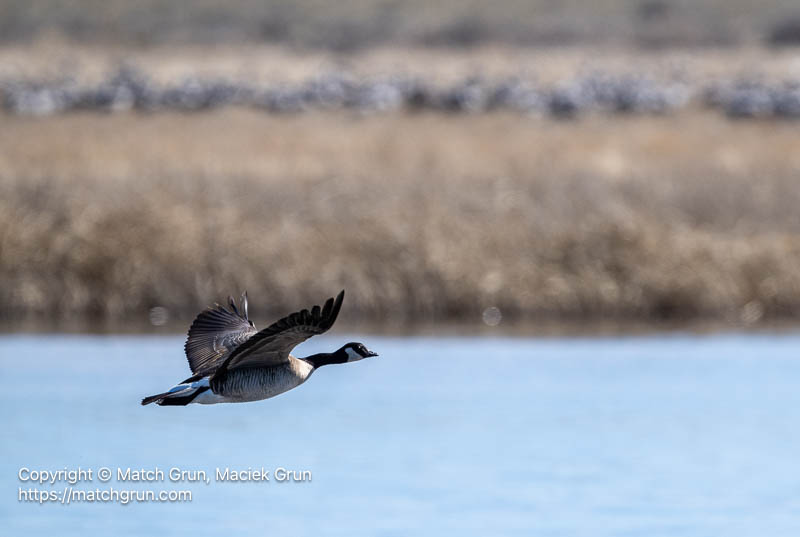
There are several hundred Canada Geese at the refuge. I managed to capture a single goose in flight soon after we arrived at the refuge.
Canada Goose In Flight, Monte Vista.
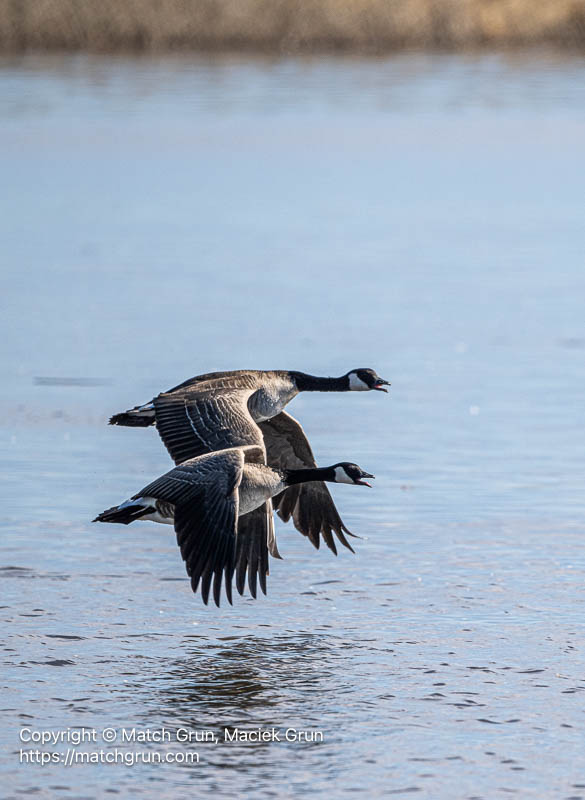
Soon after this, a pair of geese flew past. I liked the expression on this pair that I managed to capture as they were cackling in flight. Their broken reflections in the water also helped improve this image.
Canada Geese Pair In Flight, Monte Vista.
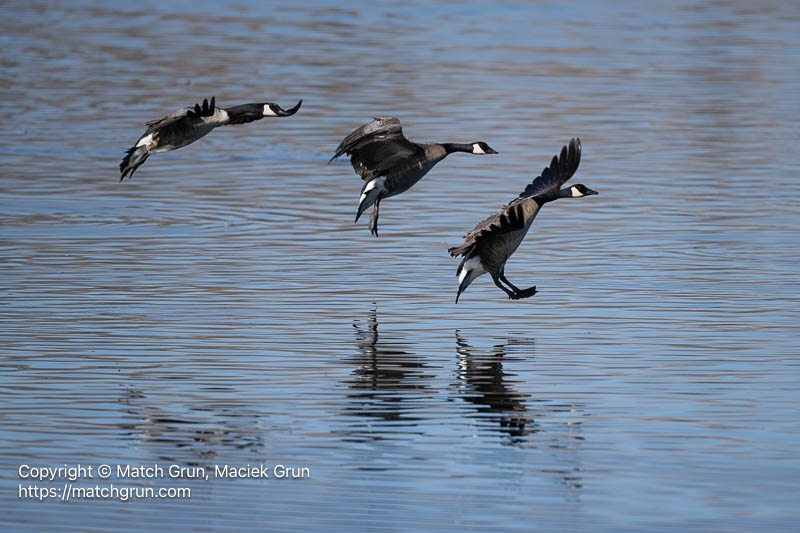
We spent some time at Home Lake, on the edge of the town. This lake hosted a few hundred ducks, but they were too far away. However, I was intrigued by the flocks of Canada Geese that flew in occasionally. In the following image, the three geese are coming in for a water landing, with landing gear deployed. This was one of my favorite images, especially since the birds are reflected in the water.
Canada Geese, Water Landing, Home-Lake.
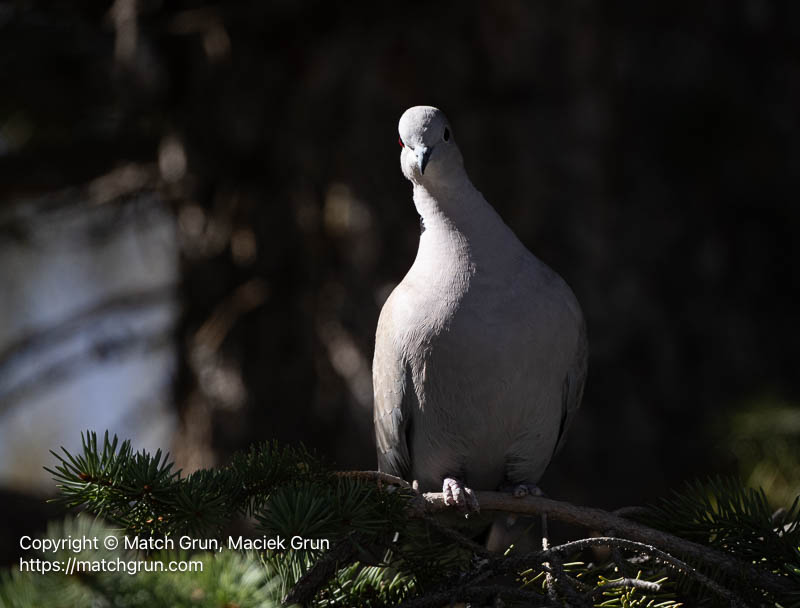
While entering the refuge, we noticed a pair of doves in the vicinity of the entrance. I managed to find these Eurasian Collared Doves, and made an image of one of the doves.
Eurasian Collared Dove, Monte Vista.
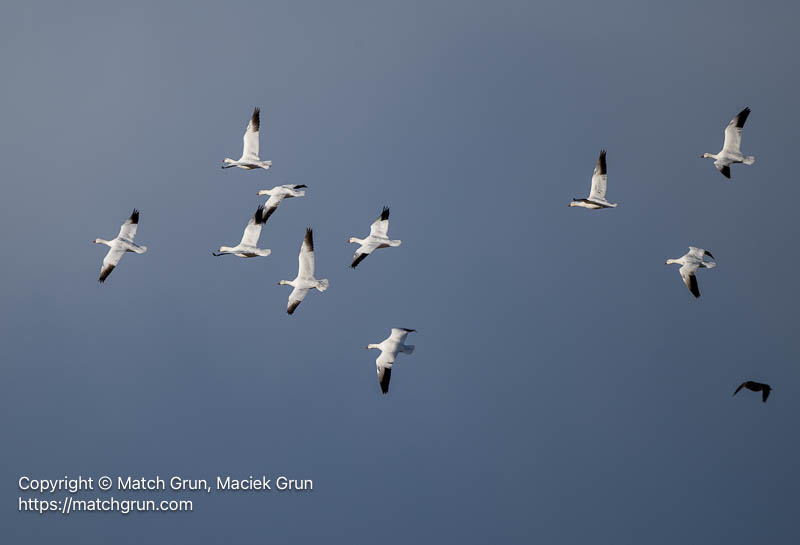
We spotted a handful of Snow Geese among the flock of Canada Geese while they were feeding. During one of the mass flight lift-offs, several Snow Geese took flight. Here is a small group of these birds.
Snow Geese In Flight, Monte Vista.
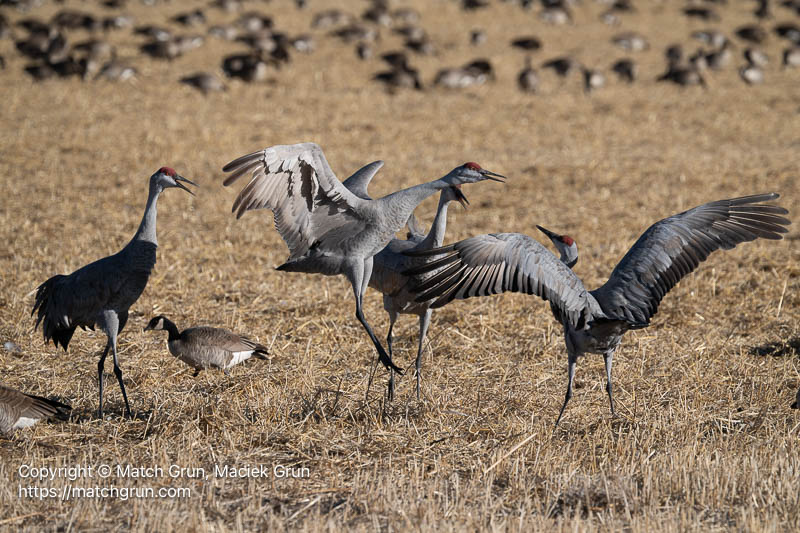
On the last morning, we made a final stop at the Wildlife Refuge before making the return trip home. It appeared that some of the Sandhill Cranes were having an altercation.
Sandhill Crane Altercation, Monte Vista.
Perhaps, all that “dancing” that was observed in not just courting! That concludes images from this year’s spring visit to Monte Vista.
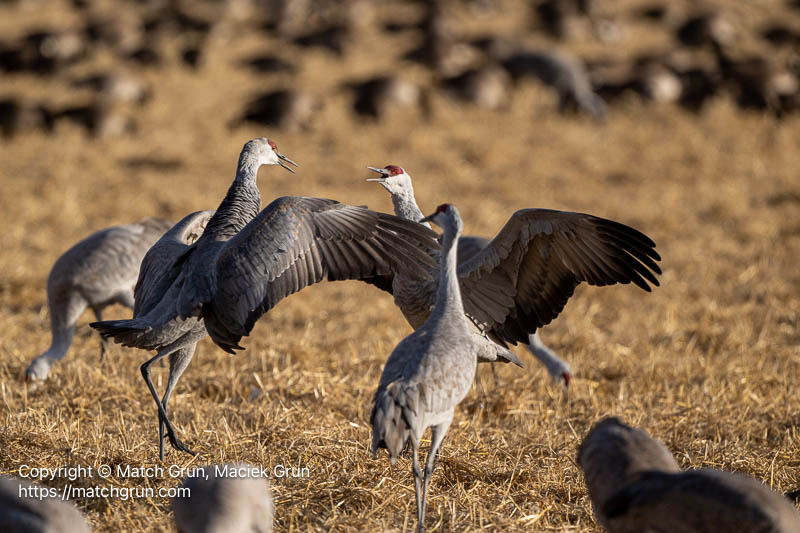
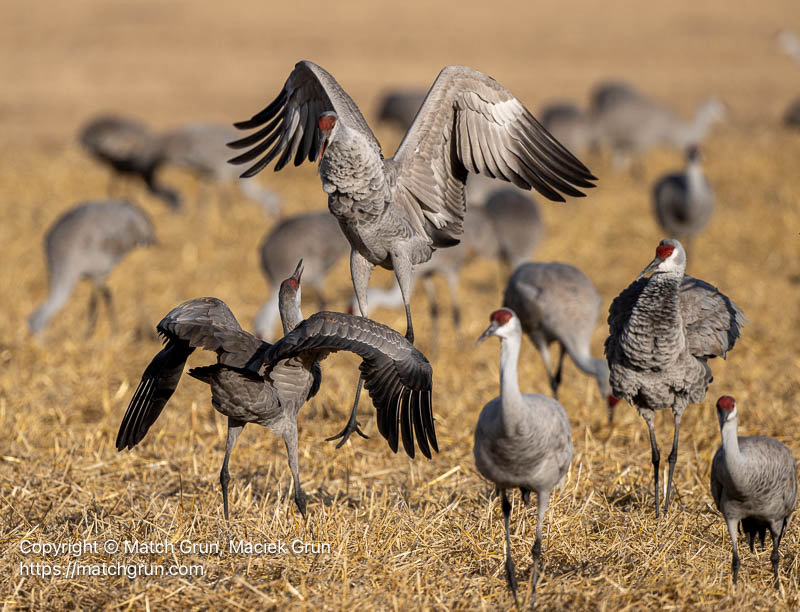
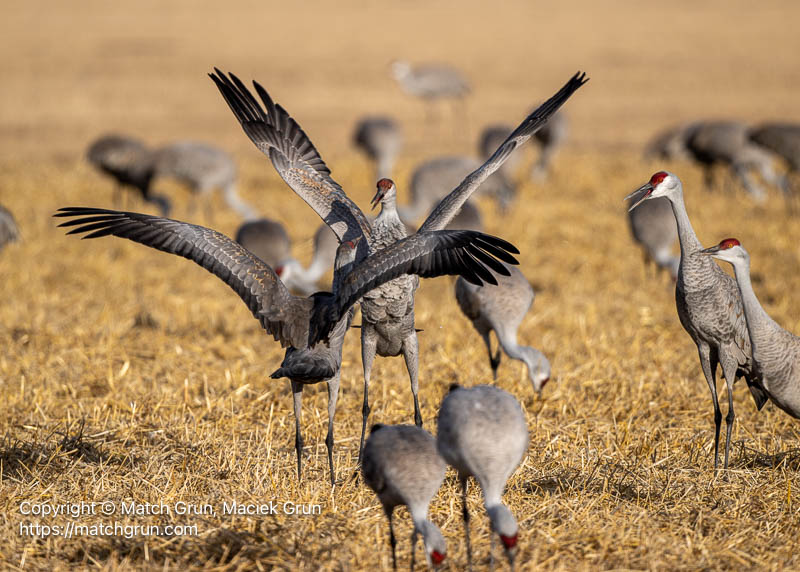
Continuing with our visit to the National Wildlife Refuge. One behavior that is often seen with Sandhill Cranes is a “dance”. This appears to be a courting behavior where the cranes often jump into the air with wings spread. Here are three images from a sequence between some of the cranes.
Sandhill Crane Dance No 1, Monte Vista.
Sandhill Crane Dance No 2, Monte Vista.
Sandhill Crane Dance No 3, Monte Vista.
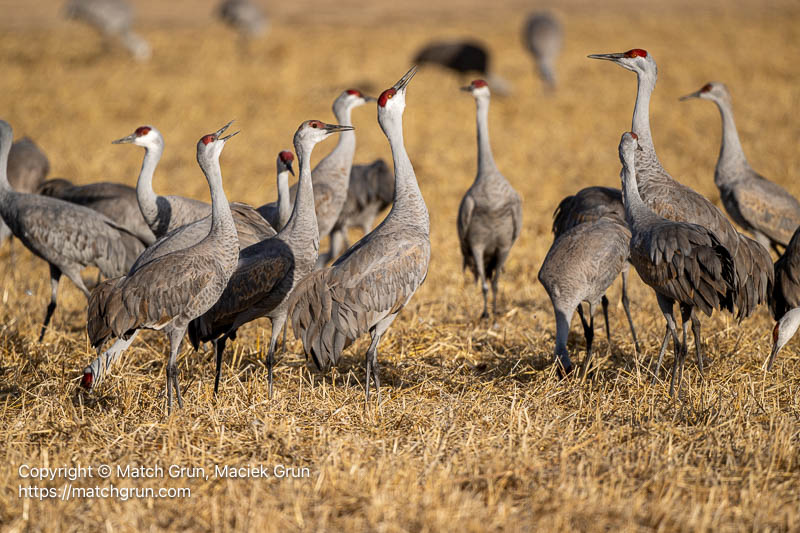
While this dance is taking place, several cranes standing nearby, often calling out.
Sandhill Cranes Calling No 1, Monte Vista.
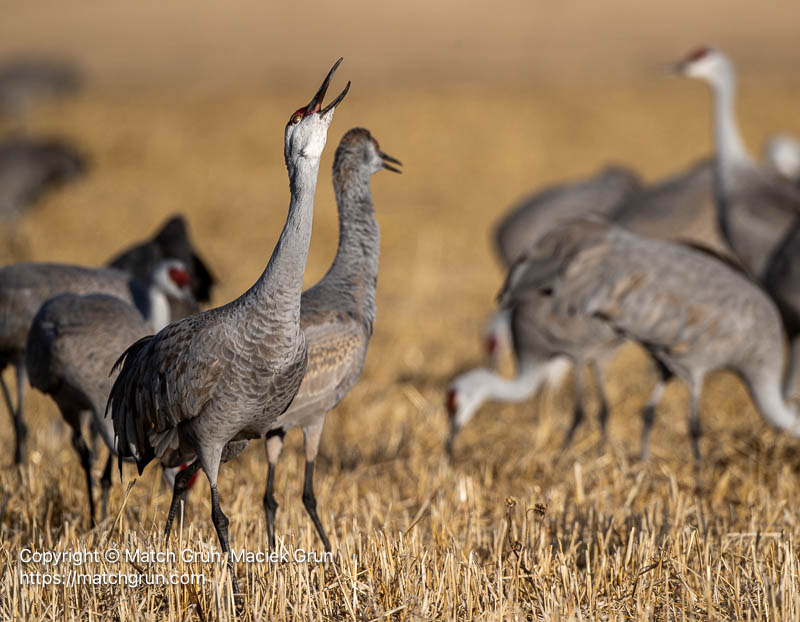
Here is another crane image.
Sandhill Cranes Calling No 2, Monte Vista.
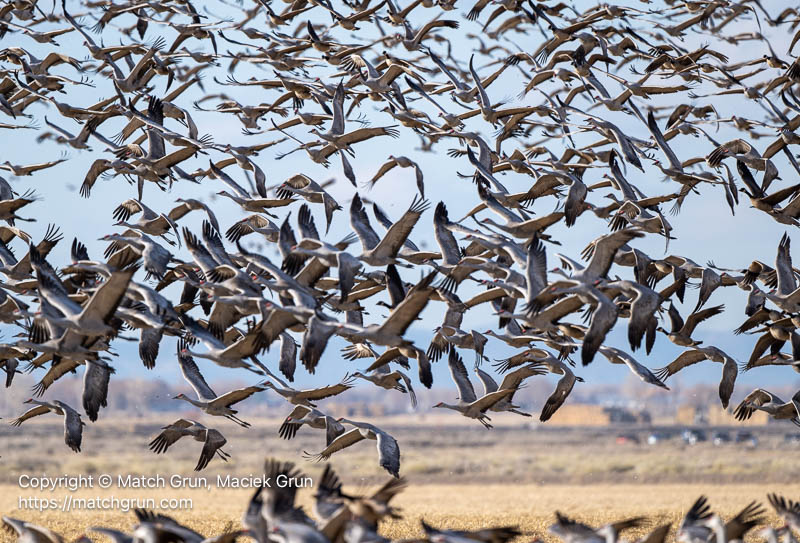
While we we watching the cranes at one location during the afternoon, most of the cranes in the feeding area suddenly took flight. The air was filled by several hundreds of cranes. Maybe something must have spooked the cranes to trigger their response?
Sandhill Cranes Taking Flight, Monte Vista.
This happened two or three times during the afternoon. In a day prior to our visit, a wolf was observed in the Refuge. Perhaps one was observed when we were there? We could not find a wolf or even a coyote after the birds had flown.